


In this class, students will create a small kitchen utility knife. Starting with a section of flat 1080 steel bar, the class will cover forging, grinding, heat treatment, handle fitment and finishing techniques. Students will leave with a finished, full-tang blade, ready to prep a meal. There will be opportunities for additional forging as time allows. Beginner blacksmithing experience is strongly recommended but not required.
Must bring:
- Work boots/shoes. No sneakers
- Long pants, no shorts
- Clothing must be cotton/denim/wool, no synthetics
- Comfortable safety glasses
- Notepad
- Water bottle
Class size is limited to 6
Materials fee: $25


Zach is a welder by trade with experience in a wide range of industries. Based in rural NY, he is an ABS bladesmith who creates custom, heirloom-quality, hand forged kitchen cutlery and edged tools. He strives to blend traditional and modern techniques and materials to create quality tools to be used for decades in the kitchen. After teaching welding for Monroe Community College and at the Arc + Flame Center for seven years, Zach now runs his own company where, in addition to blades, he manufactures tooling and machines for blacksmiths and metalworkers. He is passionate about collaborating with other local artisans, makers, and tradespeople. In his classes, Zach seeks to inspire students by sharing the functional artistry of modern bladesmithing.
https://tarbellindustries.com/

This one-day class is for everyone who has been confused, frustrated, and otherwise unsure about how to choose from the vast array of finishing products, and how to apply them. The goal is to carefully explain the building blocks of all wood colorants and finishes so that students can confidently make informed choices by knowing “what’s in the can”. The class format is a mixture of lecture, demonstration and hands on activities with an emphasis on the science, craft and art of wood finishing.
The morning is devoted to color, with an exploration of dye and pigments and how these two very different materials can be used separately and together to achieve effects including color matching, enhancing or “popping” the grain, and harmonizing the colors within a board or on an entire project. To focus on the optics of color, students will complete a classic color wheel to see the relationships of the various colors and how they interact, and how the color “temperature” of the light affects the way we actually see color. Students will also gain experience in using the four different methods of applying color: dyeing, staining, glazing and toning, which provide a nearly endless set of possible colors and decorative effects with both oil based and waterborne colorants. There will also be discussion and demonstration of using asphaltum (tar) as a glazing and ageing agent, and the many chemical or “reactive” treatments that can be used to alter the natural color of various woods.
The afternoon is all about the huge number of different finishing products available on the market, and the goal is to understand that they are all composed of the same basic components, and that they fall into groups or “families” that have similar working properties, but do not always work well with products from other families. Students will practice several ways to apply shellac, and employ the proper applicators and techniques for oil based, and waterborne varnishes, as well as the very popular hard wax-oil formulations. Using prepared panels, students will practice various techniques for rubbing out a cured finish, both to lower the sheen or to enhance the gloss.

MIKE MASCELLI has been a student and practitioner of the upholstery trade for nearly 50 years and divides his time between the worlds of classic cars and classic furniture. He has provided upholstery for national champion cars and furniture that is on display at the US House of Representatives and numerous historic homes and private collections. He is also the longtime Director of the Professional Refinisher’s Group an organization of professionals in the conservation and restoration trades, from whom he has learned much of the science, art and craft of wood finishing. Mike actively lectures and teaches, and has instructed hundreds of students in basic and advanced upholstery techniques as well as the fundamentals of wood finishing at the Connecticut Valley School of Woodworking, the Marc Adams School of Woodworking, and numerous other schools and organizations both in person and on line in both America and England.
He contributed an essay on 18th century upholstery techniques for Roubo on Furniture by Don Williams (Lost Art Press). Mike has also published a number of articles on various aspects of historic upholstery in the Journal of the Society of American Period Furniture Makers (SAPFM) and on modern upholstery for Fine Woodworking. He has also completed several instructional videos on upholstery and finishing for Popular Woodworking, and Fine Woodworking, and was a presenter at the “Working Wood in the 18th c”. conference at Williamsburg. In the summer of 2024 Fine Woodworking will release an online course: Foundations of Furniture Finishing” presented by Mike.
In addition to driving some classic cars, Mike and his wife are the very proud grandparents of two small boys who are the main focus of semi-retirement.
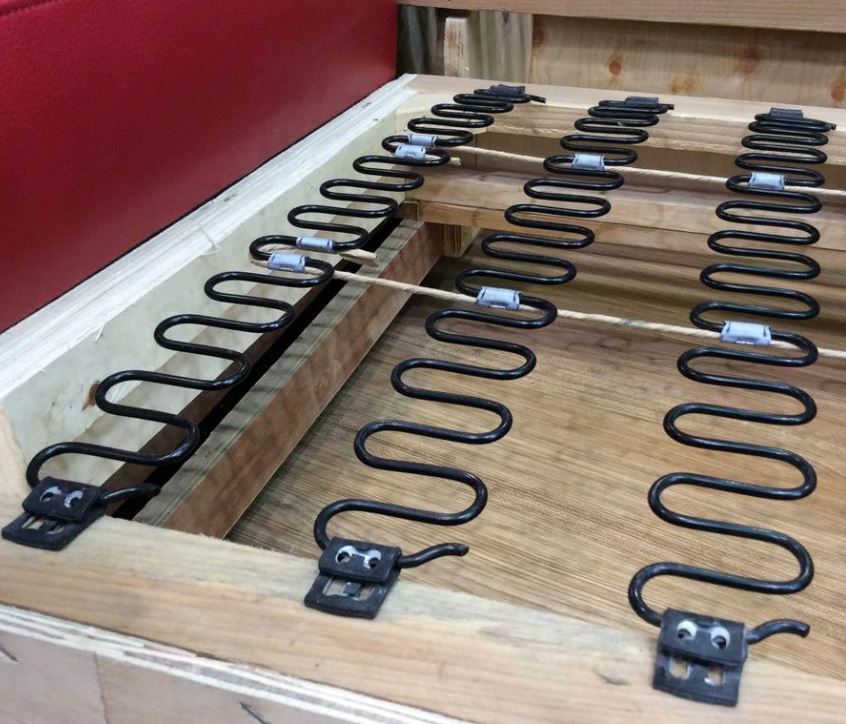
A lecture-demonstration specially created for Wendell Castle Workshop focusing on the centuries-old dialog between furniture makers and upholsterers and is based on materials from a number of Fine Woodworking on-line courses. The presentation will include a brief but thorough look at the history of the trade as it organized in England as the “Worshipful Company of Upholders” in the 16th century, up through modern times, and a complete look at the tools, materials and techniques of the upholstery trade as practiced then and now. This includes traditional materials such as coir fiber and horsehair, as well as modern foam and Dacron.
Mike will demonstrate a number of upholstery techniques including a simple slip seat using modern materials and various grades of foam and show how to properly calculate the “gap” needed for a drop in seat. In addition, he will show a classic coil spring tying (8-way tie) project and a sample of the use of serpentine (Zig-Zag) springs and clips and discuss the pros-cons of each type of treatment.
Especially for furniture makers, Mike will go over basic considerations for designing upholstered pieces, including standard sizes, types of secondary (tacking rail) woods, and placement of corner blocks and supports. An explanation of the various types and qualities of upholstery foam will also be included as well as a guide to buying leather for upholstery projects.
This presentation will be of interest to furniture builders, restorers and those just dying to know exactly what is supposed to be inside of a properly upholstered chair and there will be adequate time for questions throughout the day.
MIKE MASCELLI has been a student and practitioner of the upholstery trade for nearly 50 years and divides his time between the worlds of classic cars and classic furniture. He has provided upholstery for national champion cars and furniture that is on display at the US House of Representatives and numerous historic homes and private collections. He is also the longtime Director of the Professional Refinisher’s Group an organization of professionals in the conservation and restoration trades, from whom he has learned much of the science, art and craft of wood finishing. Mike actively lectures and teaches, and has instructed hundreds of students in basic and advanced upholstery techniques as well as the fundamentals of wood finishing at the Connecticut Valley School of Woodworking, the Marc Adams School of Woodworking, and numerous other schools and organizations both in person and on line in both America and England.
He contributed an essay on 18th century upholstery techniques for Roubo on Furniture by Don Williams (Lost Art Press). Mike has also published a number of articles on various aspects of historic upholstery in the Journal of the Society of American Period Furniture Makers (SAPFM) and on modern upholstery for Fine Woodworking. He has also completed several instructional videos on upholstery and finishing for Popular Woodworking, and Fine Woodworking, and was a presenter at the “Working Wood in the 18th c”. conference at Williamsburg. In the summer of 2024 Fine Woodworking will release an online course: Foundations of Furniture Finishing” presented by Mike.
In addition to driving some classic cars, Mike and his wife are the very proud grandparents of two small boys who are the main focus of semi-retirement.
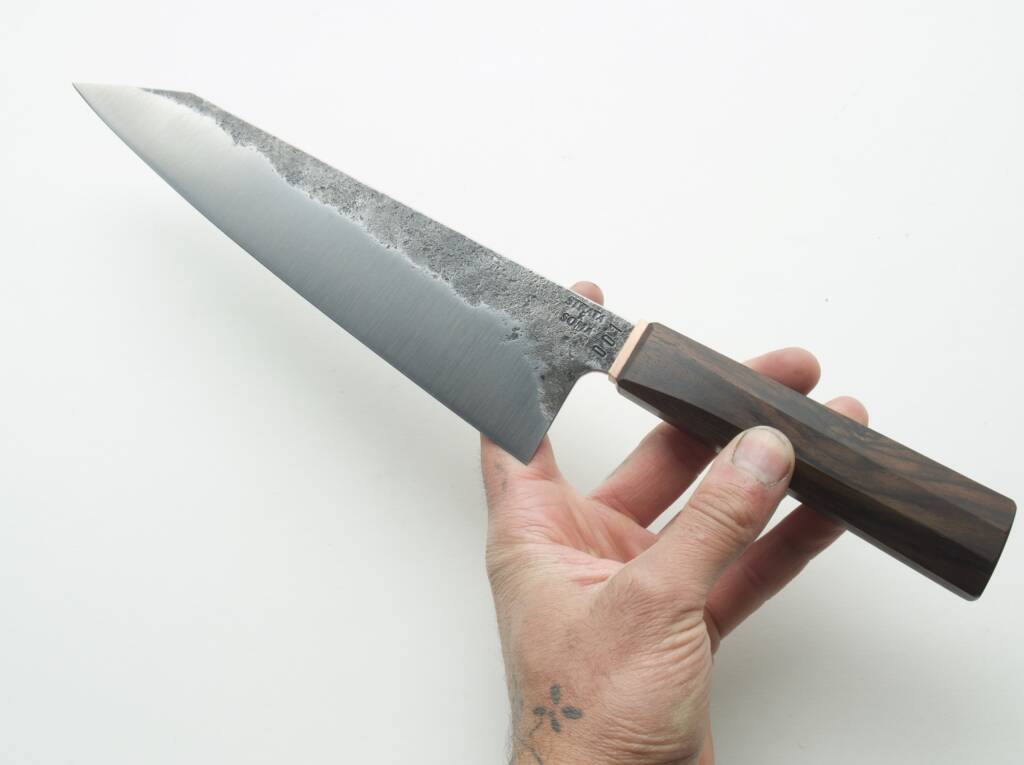
Over the course of four full days, participants will explore the techniques and aesthetics that define Japanese-style kitchen blades. Students will use Blue #2 zenko (mono steel) stock to forge a chef’s knife by hand. The class will focus on the basics of forging, heat treating, grinding, and sharpening our blades. In addition to forging and finishing the blade, the class will emphasize traditional Wa handle making and fitting, demonstrating how to achieve the clean, functional designs characteristic of Japanese knives. Whether you are new to bladesmithing or looking to expand your skills, this workshop offers a comprehensive introduction to Japanese forging techniques while encouraging experimentation and personal expression in your work. Each student will leave with a fully finished blade, ready for use.
Class fee: $475
Materials fee: $75
Class size limited to 6
Kiran Chapman (he/they) is a blacksmith based in Maine. They became fascinated by blacksmithing after moving to Maine from NYC and meeting a local knife maker. They went on to work for Wick’s Forge, a third-generation blacksmith shop, for two years. In addition to their own studio where they teach blacksmithing classes, they run the sharpening department at Strata Portland, which offers endless learning and practice on a wide range of blades. Their experience working at Strata and visiting makers in Japan has had a big impact on the type of blades they make and their understanding of metallurgy and blade geometry.
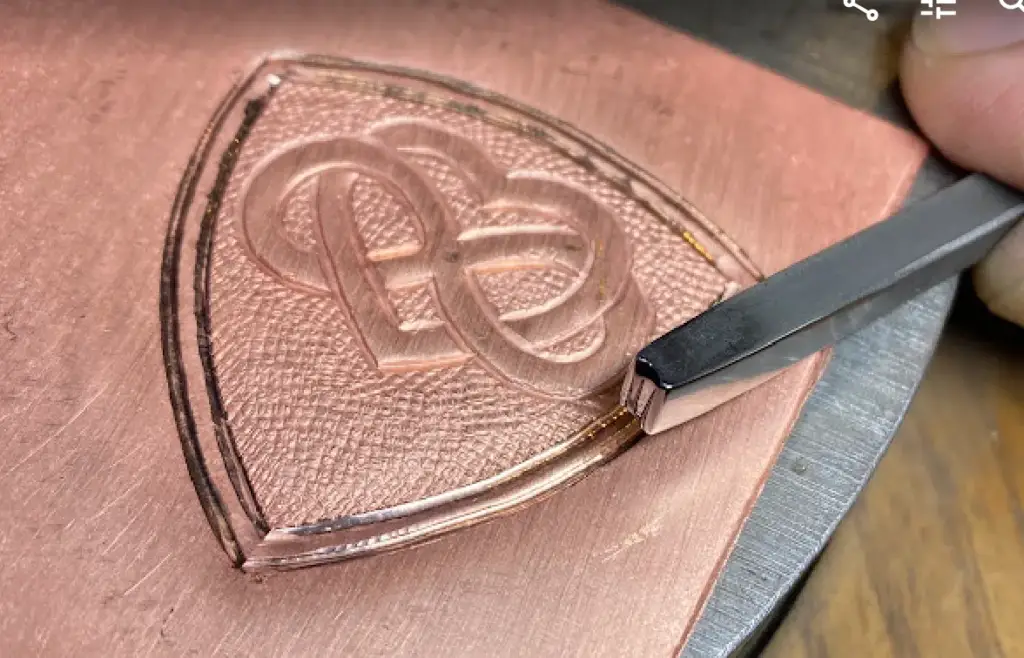
Chasing is the art of using specialized hammers, punches, and chisels to emboss images into the surface of metal. From simple to complex, adding chased elements to a metal's surface softens and dignifies its appearance. This class will introduce you to the various tools and techniques to create images and patterns on any metal. You'll use these techniques to create a patterns on flat copper sheet suitable for framing, use as jewelry, or inlay into wood. Other topics covered include annealing, work hardening, and patination.
Who Should Take this class:
This class is open a to all experience levels. Students with a meticulous eye for detail will love this class.
Student tips: Bring your glasses or best magnifying readers. Your Noise Cancelling earbuds or headphones can make many simultaneous hammers more pleasant.
Class will make use of hand tools, torches, and mild chemicals for cleaning and patination.
Class fee: $300
Materials fee: $75
Class size limited to 10
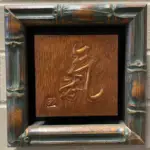
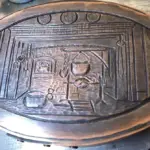
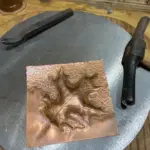
Brian took his first blacksmithing class in 2005 under local smith Richard Rightmyer to learn how to make his own woodworking tools. Captivated by the feel of hot metal under the hammer, Brian poured all his free time into advancing his smithing skills taking classes whenever he could. Brian began teaching blacksmithing and coppersmithing in 2012 and has demonstrated at many public events and conferences. Recently, he has focused on the art of copper chasing, finding the meticulous attention to detail it requires to be a form of meditation in motion.
Brian is an electrical engineer by day and holds a 6th Degree black belt in Aikido. He finds many commonalities with the efficient body movements of martial arts and the proper ergonomics for blacksmithing and coppersmithing. Brian has blended the arts to create effective and safe hammering techniques for people of all sizes. s an engineer, he is fascinated by the science of blacksmithing, specifically the metallurgy that goes into tool making. He firmly believes that true learning happens when you are having fun.
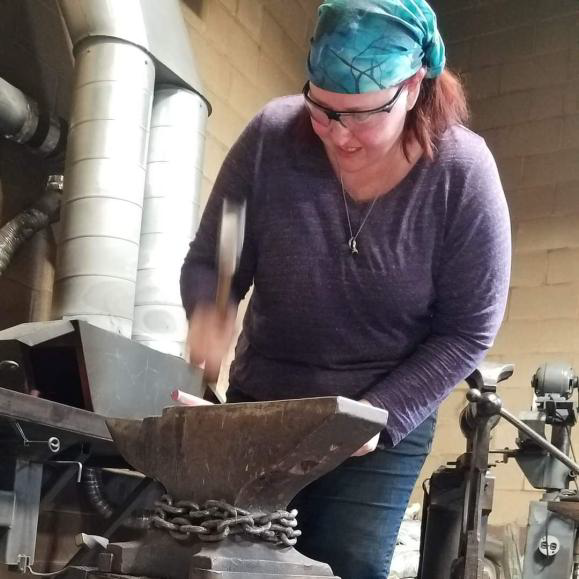
Experience what it's like to work hot steel! Students will learn to create a grill turner. Focus will be on the fundamentals of hammer control to get the steel to respond the way we want it to. The class will go over the basic operations of tapering material, forming, and finally refining function with the anvil and hammer.
Teasers are an excellent way to get a taste of forging. Candy will use a combination of demonstrations and hands-on instruction to enhance your learning experience.
Who Should Take this class:
This is a beginner class. We will make use of hammers and forges. The course runs from 6pm to 10 pm.
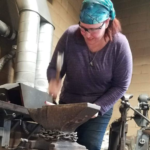
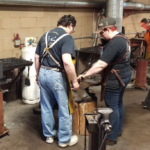
Candace started blacksmithing in 2006 and has explored many aspects of working metal. Through her explorations she has developed a strong belief that regardless of what you create a strong foundation in the basic, fundamental techniques is critical. All her classes incorporate this focus on developing strong foundational skills.
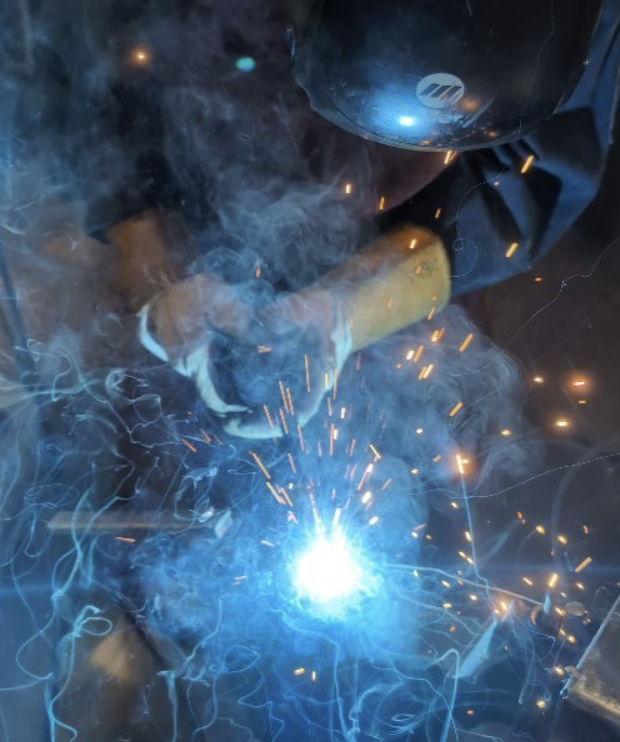
This two-day workshop provides a hands-on introduction to MIG welding and basic steel fabrication. Students will learn how the welder works and how to set up the machine for mild steel. Practice exercises will focus on establishing a stable arc and producing consistent welds.
Students will make several common joints and learn how to recognize basic welding problems. Demonstrations will also cover measuring, marking, cutting, grinding, clamping and fitting steel. Safety, ventilation and material preparation will be discussed throughout the workshop.
After completing the practice exercises, students will apply their skills to a small fabrication project.
The class is designed for beginners and does not require previous welding experience.
Students Should Bring
● Leather steel toe boots or safety-toe boots
● Long natural-fiber pants
● Long-sleeved natural-fiber shirt
● Notebook and pencil
● Reusable water bottle

Annalisa Barron is an interdisciplinary artist based in New York City and Rochester, NY. She graduated from Penn State University with a BFA in painting and drawing in 2013 and with an MFA in sculpture from the Pratt Institute in 2017. Her work has been exhibited at the Cooper Union, University of Rochester, Southern Oregon University, BunkerPROJECTS Gallery (Pittsburgh, PA), U.S. Embassy in Nicaragua, NO/GLOSS film festival (UK), and the Anthology Film Archives (NYC). The Kingdom of Back (2017) was featured in Berlin, Germany, as part of GRRL HAUS Cinema’s 2018 European tour. She served as a panelist for the 2020 NYFA Craft and Sculpture Fellowships and is a recipient of NYSCA’s 2021 DEC Regrant Program/Individual Artist Grant. She has received support from the New York Foundation for the Arts, the New York Film and Video Council, the AAUW, the New York State Inspire Grant, Penn State University, and the Simmons-Jansma Project Renew Grant. Currently, Annalisa teaches in the College of Art and Design at the Rochester Institute of Technology.
http://www.annalisabarron.com

The bandsaw can be one of the most versatile, accurate and safe machines in your workshop—providing it is set up and used properly. A new or even a well used bandsaw with a ½ HP motor can be tuned to cut precision joints or resaw flawlessly without purchasing aftermarket accessories or expensive blades. Installing new tires, selecting and setting blade tension, tracking, cutting curves and resawing will be covered. A variety of useful jigs designed to be used with the bandsaw will be demonstrated. Illustrations will be provided so you can make your own. Michael operates one of the most diversely equipped workshops in North America. It includes three industrial table saws but he can’t remember the last time he ripped a piece of wood on a table saw. Instead, he prefers to use a vintage 15” General Mfg. bandsaw. He bought this bandsaw in 1974, tracked the blade once with only modest tension, installed a factory fence parallel to the miter slot and has not had to adjust it in 50 years. That is one of nine bandsaws in his workshop. Let the bandsaw master show you how to make this simple machine the most versatile in your workshop. This class will be limited to 12 students; while mostly demonstration, the class size will allow for some student hands on.

Canadian designer/maker, teacher and mentor Michael C. Fortune has become acclaimed for his innovative, but resolved, designs for one-of-a-kind objects in wood, commissioned residential furnishings, and items in limited editions. He is acknowledged for both his technical and design expertise, giving lectures and workshops across Canada, United States, New Zealand, Australia, and Brazil. Michael's work has appeared in numerous exhibitions worldwide and he has taught at many schools and craft centers including; Sheridan College School of Crafts and Design, Ryerson Polytechnical Institute, the Rochester Institute of Technology NY, Worcester Center for Crafts in Massachusetts, Anderson Arts Center, Colorado, Savannah College of Art and Design, Australian National University School of Art, and the Marc Adams School in Indiana where the fellowship program for advanced students has been named in his honor. Michael is the senior mentor for the Artist in Residence program (2018, 2020) at the Centre for Fine Woodworking in New Zealand.
Fortune’s international career includes consulting for Trinidad and Tobago's Commonwealth Fund for Technical Assistance, working for sustainable source timber in Mexico aimed at supplying the expanding hotel industry within the country, and volunteering for Woodlinks, a joint Canadian/U.S. not-for-profit organization dedicated to revitalizing vocational training in secondary schools throughout North America. Michael is also assisting a new school in Puerto Rico that promotes use of timber salvaged after destructive hurricanes.
In 1993, Michael was the first woodworker to receive the prestigious Prix Saidye Bronfman, Canada’s highest award in the crafts, and in 2007 he was the first Canadian to receive the Award of Distinction from the Furniture Society. He received the Mather Award in 2019 for his contribution to craft in Ontario. Michael Fortune has a clear vision of how fine craft can positively effect the culture and economy of Canada and the world beyond.
http://www.michaelfortune.com/
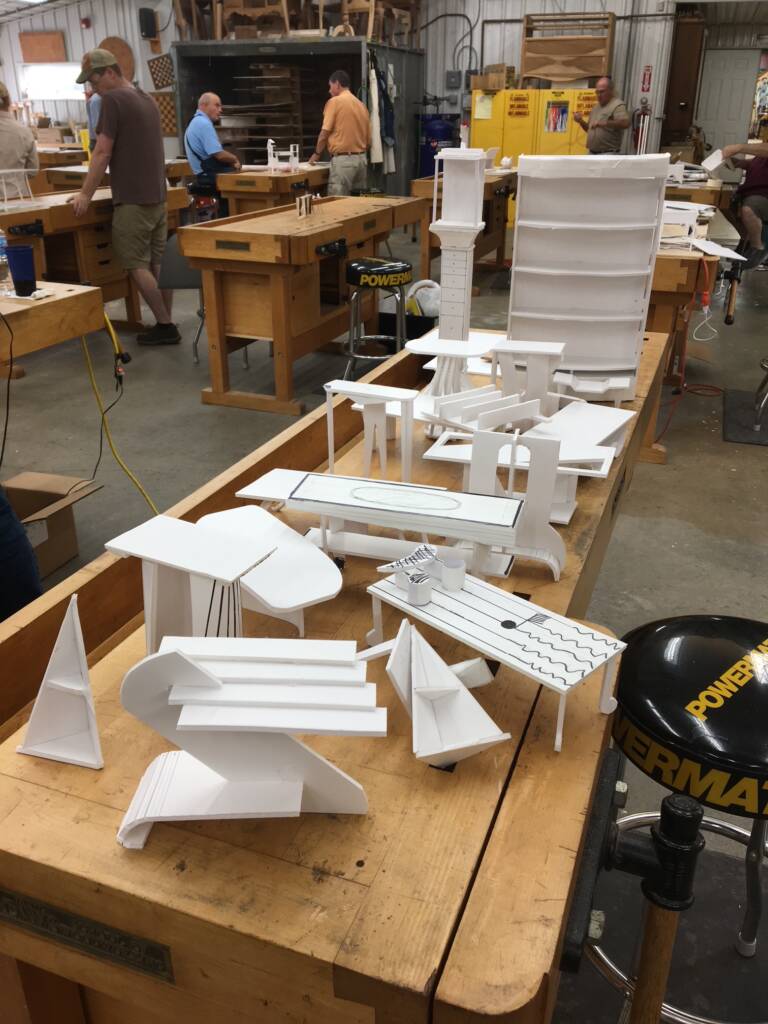
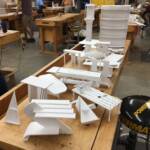
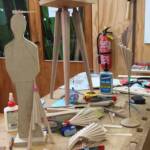
This 6-day workshop will introduce the participants to a series of simple bench top design exercises that will exponentially expand where and how you look for inspiration then be able to convert what you’ve observed into practical pieces of furniture or sculpture. This course is for woodworkers who want to move beyond working “square” or copying other woodworker’s designs. Sharpen those scissors, plug in that glue gun hone those new found observation skills and have fun while you develop your own unique furniture forms. This course will change your perception of furniture design and making.
Key Points
1. How to observe your environment and identify design ideas.
2. Develop your own custom design sequence.
3. How to sketch, make models and full-size mock-ups.
4. How to critique your own work and who to engage to critique your work
5. Assembling an idea bank that will be inspirational for years to come.
Tuition: $1400
Material: $100
Student Materials
- Dollar store Foamcore, 20 x 30 (2) each
- basswood or similar
- cardstock
- 9mm Olfa style cutter
- Architects scale (not engineers)
- Pad of tracing paper 11 x 14
- 2B and 6B pencils
- a cameraphone
Canadian designer/maker, teacher and mentor Michael C. Fortune has become acclaimed for his innovative, but resolved, designs for one-of-a-kind objects in wood, commissioned residential furnishings, and items in limited editions. He is acknowledged for both his technical and design expertise, giving lectures and workshops across Canada, United States, New Zealand, Australia, and Brazil. Michael's work has appeared in numerous exhibitions worldwide and he has taught at many schools and craft centers including; Sheridan College School of Crafts and Design, Ryerson Polytechnical Institute, the Rochester Institute of Technology NY, Worcester Center for Crafts in Massachusetts, Anderson Arts Center, Colorado, Savannah College of Art and Design, Australian National University School of Art, and the Marc Adams School in Indiana where the fellowship program for advanced students has been named in his honor. Michael is the senior mentor for the Artist in Residence program (2018, 2020) at the Centre for Fine Woodworking in New Zealand.
Fortune’s international career includes consulting for Trinidad and Tobago's Commonwealth Fund for Technical Assistance, working for sustainable source timber in Mexico aimed at supplying the expanding hotel industry within the country, and volunteering for Woodlinks, a joint Canadian/U.S. not-for-profit organization dedicated to revitalizing vocational training in secondary schools throughout North America. Michael is also assisting a new school in Puerto Rico that promotes use of timber salvaged after destructive hurricanes.
In 1993, Michael was the first woodworker to receive the prestigious Prix Saidye Bronfman, Canada’s highest award in the crafts, and in 2007 he was the first Canadian to receive the Award of Distinction from the Furniture Society. He received the Mather Award in 2019 for his contribution to craft in Ontario. Michael Fortune has a clear vision of how fine craft can positively effect the culture and economy of Canada and the world beyond.
http://www.michaelfortune.com/
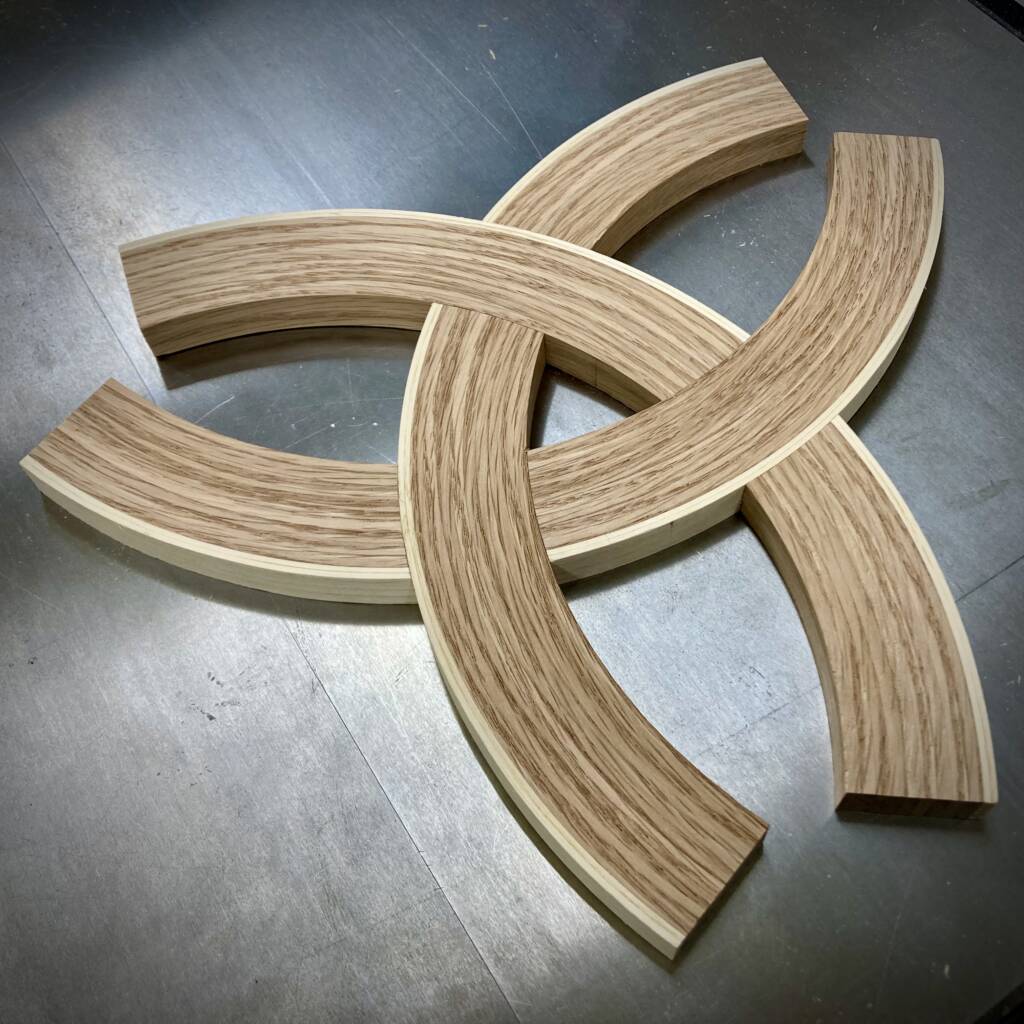
Gain an introductory understanding of bent lamination, including material science, mold and jig making, and curved joinery.
Students will build a bent wood trivet using a variety of specialized techniques throughout this two-day class.
Tuition: $350
Materials: $50
Capacity: 10
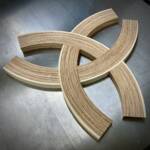
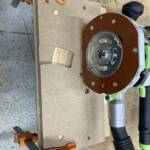
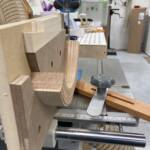
Laura Kishimoto is a designer and maker based in Denver, Colorado and a graduate of the Rhode Island School of Design, where she earned a BFA in Furniture Design in 2013. Her work falls somewhere between sculpture and furniture, distinguished by its spatial complexity and visually striking curves. Central to her practice is a technique known as freeform bent lamination, which allows her to push the wood to its material limits and create curiously organic and emotionally evocative forms. Her pieces can be found in the permanent collections of the Denver Art Museum in Colorado and the Mint Museum in North Carolina.

Bent lamination represents a dramatic departure from most traditional fine woodworking. Rather than working within rectilinear geometry, you will lean into the materiality of the wood and explore its natural strengths through curvature. Reference face is often non-existent, so cutting joinery requires some creative thinking and novel use of machinery and hand tools. We will explore a variety of methods including cold lamination, mold making, vacuum forming, and freeform bending. Students will design and prototype a project that showcases bent lamination aesthetically and structurally.
Class fee: $1200
Materials fee: $200
Class size limited to 10


Laura Kishimoto is a designer and maker based in Denver, Colorado and a graduate of the Rhode Island School of Design, where she earned a BFA in Furniture Design in 2013. Her work falls somewhere between sculpture and furniture, distinguished by its spatial complexity and visually striking curves. Central to her practice is a technique known as freeform bent lamination, which allows her to push the wood to its material limits and create curiously organic and emotionally evocative forms. Her pieces can be found in the permanent collections of the Denver Art Museum in Colorado and the Mint Museum in North Carolina.
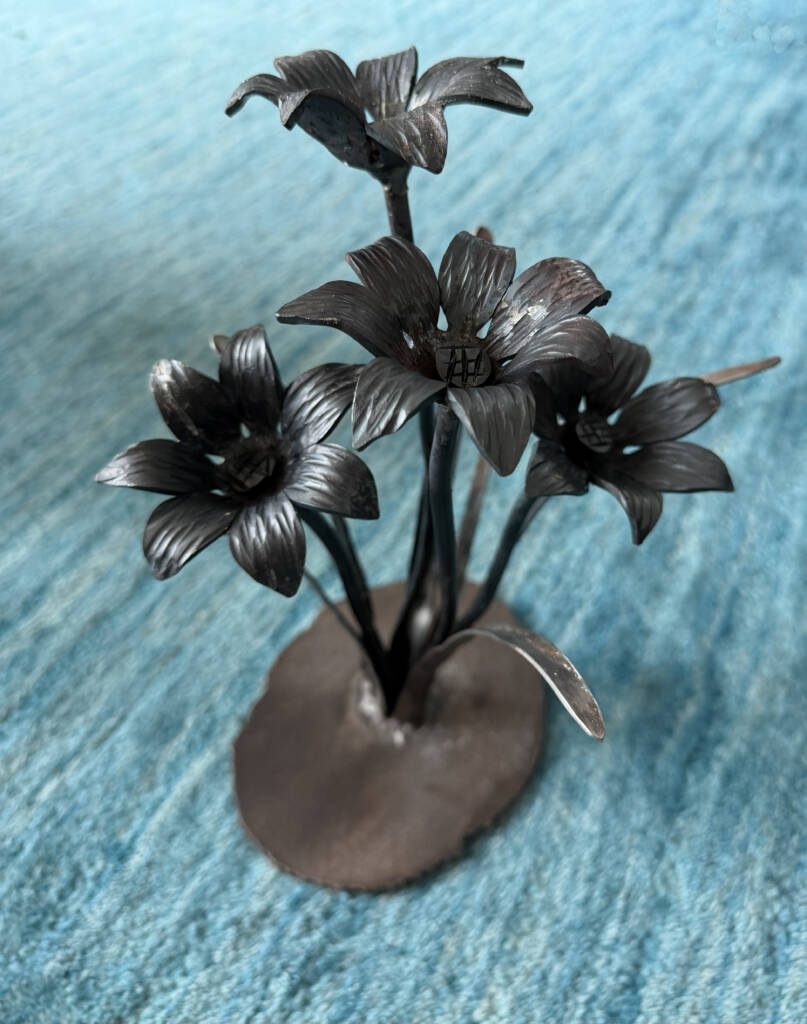
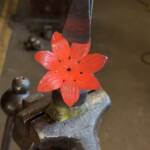
Explore the natural world through forged metal in this hands-on botanical forging class. Students will learn fundamental blacksmithing techniques while forging a variety of leaves, flowers, stems, and other organic forms from steel.
You’ll also be introduced to plasma cutting to create shapes from sheet metal and MIG welding to assemble your work. Using these skills, each student will design and create a unique botanical sculpture that combines traditional forging with modern metalworking techniques.
No previous blacksmithing or welding experience is required.

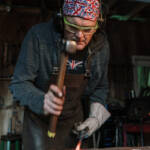
Mark Teece is an artist blacksmith near Syracuse, NY, with over 10 years of experience running his own blacksmithing business. He is passionate about teaching this ancient craft, offering blacksmithing classes to students of all ages—from youths to retirees—ensuring each student enjoys a hands-on, personal experience in a small class setting. Mark specializes in creating custom ornamental ironwork for homes and gardens, blending traditional techniques with artistic craftsmanship. Mark's work is deeply influenced by his upbringing in Britain, where he was surrounded by historical ironwork, as well as the rich legacy of colonial blacksmiths in New England.
Instagram: @TheBritishBlacksmith