


Wood hand planes are a joy to use, and once you know the steps to make them, you will be able to make planes in any shape and size, including curved bottom planes. In this weekend workshop students will construct a classic smoothing plane with a 1¾" iron, and it may become your new favorite hand tool. Tim was a student of Jim Krenov in the 1980s and learned directly from him how to create “the cabinetmaker’s Stradivarius”, as Krenov referred to the handmade plane.
Class fee: $350
Materials fee: $100
Class size limited to 10

Tim Coleman creates custom furniture in a shop he built a few paces from his home in rural Western Massachusetts. He has been creating furniture for clients and exhibition for more than 35 years after studying at the College of the Redwoods with James Krenov in the 1980s. Tim is known for his graceful and dynamic furniture forms which often feature richly patterned and textured surfaces. Using low-relief carving, marquetry, embossing, and thick veneer tiles, he has developed simple but innovative techniques that put a new spin on traditional embellishment. As passionate as Coleman is about his own work, he is equally excited to pass on his knowledge as a frequent contributor to Fine Woodworking Magazine and by teaching at schools throughout the US.
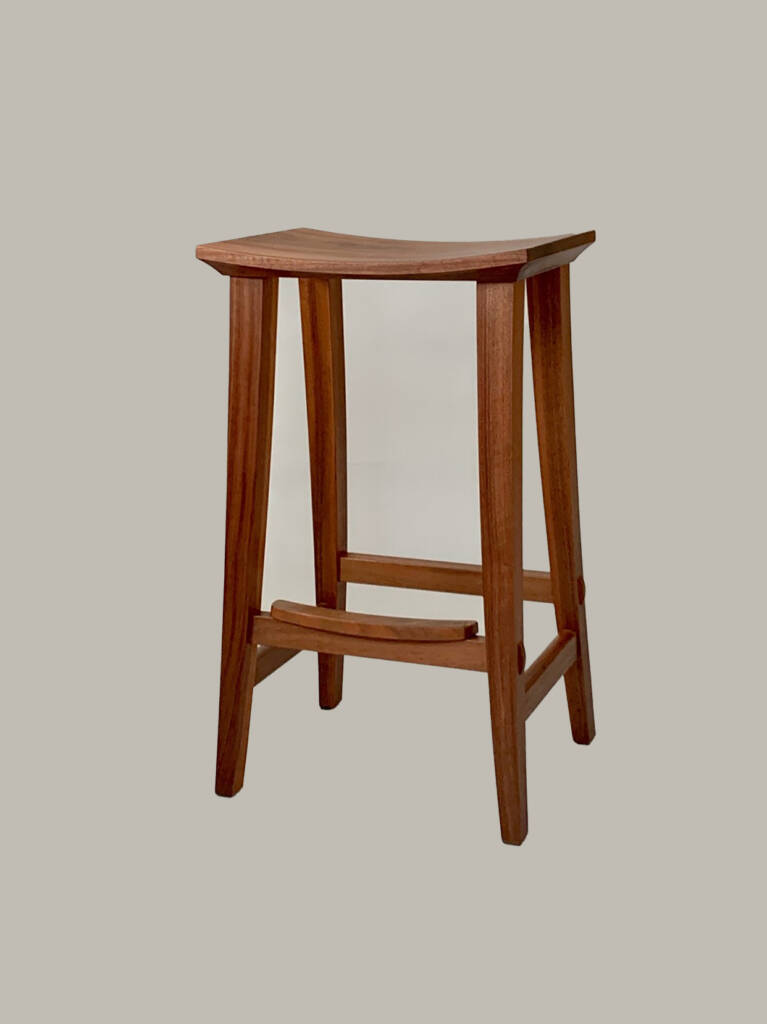
This stool is featured in issue 322 of Fine Woodworking magazine.
In this 5-day workshop, students will learn to build a contemporary counter stool that combines precise machine work for the legs and stretchers with a hand-shaped seat and footrest. Featured in issue 322 of Fine Woodworking magazine, this shapely stool is a great project to learn mortise and tenon joints, both through tenons and floating tenons to connect the legs to the solid wood seat. Students will have lots of practice with the band saw to cut the legs, seat and footrest, and will also gain experience with a hollow chisel and slot mortiser. The seat is shaped with a compass plane, and students will use carving gouges and round bottom planes to shape the cove under the seat. Tim will provide a detailed, measured drawing for each student and jigs to aid in the making.
Class fee: $900
Materials fee: $75
Class size limited to 10
Tim Coleman creates custom furniture in a shop he built a few paces from his home in rural Western Massachusetts. He has been creating furniture for clients and exhibition for more than 35 years after studying at the College of the Redwoods with James Krenov in the 1980s. Tim is known for his graceful and dynamic furniture forms which often feature richly patterned and textured surfaces. Using low-relief carving, marquetry, embossing, and thick veneer tiles, he has developed simple but innovative techniques that put a new spin on traditional embellishment. As passionate as Coleman is about his own work, he is equally excited to pass on his knowledge as a frequent contributor to Fine Woodworking Magazine and by teaching at schools throughout the US.
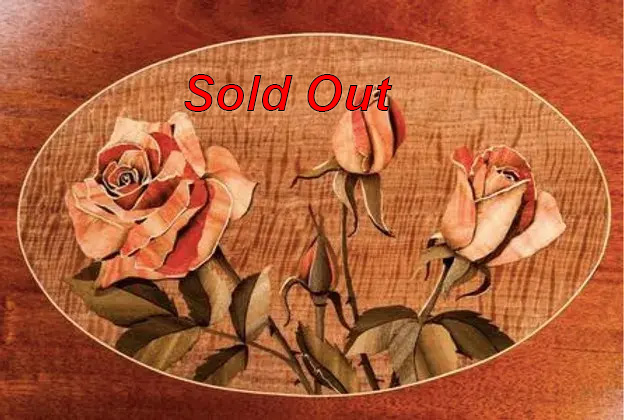
Marquetry is the delicate art of creating intricate images, decorative elements, and lettering by cutting and fitting together different wood species. Originating during the Italian Renaissance, marquetry has adorned furniture, church pews, and grand panels in homes and palaces for centuries. Over time, its techniques and styles evolved as the craft spread worldwide.
In this two-day introductory class, Frank will guide you through his favorite marquetry techniques, including packet cutting and double-bevel sawing, revealing that anyone can bring this timeless art to life. You’ll learn how to select and prepare veneers, use essential tools, and practice foundational skills. Starting with simple designs, you’ll then explore reproducing historical paterae—classic motifs found on 18th and 19th-century furniture. Along the way, you’ll master sawing methods and ancient techniques like sand shading to achieve depth and a three-dimensional effect.
The course culminates in double-bevel cutting, where you’ll practice precision techniques for creating flawless lettering with no visible gaps. Join us for a journey into the rich tradition of marquetry and discover how to bring beautiful, wood-crafted artistry into your work.
Class fee: $385
Materials fee: $50
Class size limited to 10


Frank Strazza is a master traditional fine furniture maker with over 30 years of experience, based in Central Texas. His woodworking journey began at the tender age of 11. After graduating, Frank served many years as an apprentice honing his craft under the tutelage of renowned artisan Paul Sellers. Frank's work has been showcased in local and national publications and is part of the White House's permanent collection. His masterpieces have garnered multiple top awards in nationally recognized furniture shows, including Best of Show and People's Choice. He has been building furniture for over 25 years and his work has been featured in both local and national publications, including Woodworker West, Woodwork Magazine, and Fine Woodworking.
A passionate educator, Frank travels across the country imparting the timeless skills of hand tool woodworking to eager students. His diverse interests span Windsor chair making, intricate inlay, violin crafting, and the art of marquetry. When he's not in the shop, Frank can be found cycling, and making music on the mandolin and cello.
http://www.strazzafurniture.com/

In this immersive class, students will gain a strong foundation in traditional hand-tool woodworking, learning core joinery techniques that have stood the test of time. Led by Frank Strazza, who brings over 30 years of experience and knowledge from his own traditional apprenticeship, this class is an ideal opportunity to build lasting skills. Instead of focusing on completing a project, students will practice fundamental techniques, developing a deeper understanding of woodworking essentials that can be applied to future projects with confidence and precision.
You’ll learn to work with essential hand tools—saws, planes, chisels, and scrapers—while discovering the methods to keep them sharp and effective. You’ll hand-cut a variety of classic joints, including dados, dovetails, and mortise and tenon joints, each skill building upon the last. By starting with a rough board, you’ll also learn to four-square it entirely by hand, gaining hands-on experience in planing and working the wood from its raw state. Toward the end of the week, you’ll have the chance to use your new skills to begin creating a simple dovetailed box, blending all of the techniques you’ve learned. The emphasis is on technique rather than rushing to finish a project, giving you a solid grasp of joinery fundamentals.
Key Techniques Covered
Joinery Fundamentals:
- Hand-cut dados
- Dovetails (through and half-blind)
- Mortise and tenons, including through mortises
Tool Mastery:
- Adjusting and using essential hand tools, including saws, planes, chisels, and scrapers
- Sharpening chisels, saws, scrapers, and planes to keep them at peak performance
- Four-Squaring a Board:
- Learning to plane a rough board to a fully four-squared state
Course Takeaways
By the end of the class, you’ll have the confidence to hand-cut various joinery types, tune and use hand planes to their fullest, and apply sharpening techniques to keep your tools in top condition. This course gives you a solid foundation in joinery, allowing you to approach future woodworking projects with skill and confidence.
Class fee: $900
Materials fee: $25
Class size limited to 10

Frank Strazza is a master traditional fine furniture maker with over 30 years of experience, based in Central Texas. His woodworking journey began at the tender age of 11. After graduating, Frank served many years as an apprentice honing his craft under the tutelage of renowned artisan Paul Sellers. Frank's work has been showcased in local and national publications and is part of the White House's permanent collection. His masterpieces have garnered multiple top awards in nationally recognized furniture shows, including Best of Show and People's Choice. He has been building furniture for over 25 years and his work has been featured in both local and national publications, including Woodworker West, Woodwork Magazine, and Fine Woodworking.
A passionate educator, Frank travels across the country imparting the timeless skills of hand tool woodworking to eager students. His diverse interests span Windsor chair making, intricate inlay, violin crafting, and the art of marquetry. When he's not in the shop, Frank can be found cycling, and making music on the mandolin and cello.
http://www.strazzafurniture.com/

In this weekend course furniture maker and educator, Andrew Hunter, will guide students through the process of setting up a new Japanese plane. What seems like a simple tool, a blade and a block of wood, the Japanese plane (Kanna) is actually a very complex instrument with many subtle qualities. The first challenge most woodworkers face when learning to use a Kanna is that they don’t come ready to use out of the box. You are only supplied with great ingredients, and it is up to the user to get the fit between the blade and the block just right.
Andrew will work with each student to get their new plane into working order. We will cover sharpening and shaping the blade, fitting the blade to the block and profiling its sole for optimal performance. Of course, we will also spend time using your new plane, learning to work with your whole body, not just your arms. The weekend will wrap up by putting our new planes to use with a friendly planing contest (kezurou-kai). By the conclusion of this class, each student will take home a fully operational Japanese hand plane and have the know how to keep it working correctly.
Materials will be purchased from Andrew.
The 54mm plane is currently $200. The 64mm plane is currently $310. Attendees will receive an email a week or two prior to the class to get their order for Andrew.
Student Tool List:
Students should bring sharpening stones.

Andrew is a custom furniture maker working and living in New York’s Hudson Valley. Best known for his use of traditional Japanese hand tools, Andrew demonstrates and teaches across the country. As a self-taught woodworker, he offers a unique perspective to other Americans exploring Eastern woodworking. His workshops demonstrate that by understanding the fundamental principles behind other cultures’ tools and techniques, all woodworkers can benefit. A frequent contributor to Fine Woodworking magazine, he is eager to share what he has learned in his 25-plus years of making furniture.
https://www.instagram.com/andrewhunter_furniture/

This one-day class is for everyone who has been confused, frustrated, and otherwise unsure about how to choose from the vast array of finishing products, and how to apply them. The goal is to carefully explain the building blocks of all wood colorants and finishes so that students can confidently make informed choices by knowing “what’s in the can”. The class format is a mixture of lecture, demonstration and hands on activities with an emphasis on the science, craft and art of wood finishing.
The morning is devoted to color, with an exploration of dye and pigments and how these two very different materials can be used separately and together to achieve effects including color matching, enhancing or “popping” the grain, and harmonizing the colors within a board or on an entire project. To focus on the optics of color, students will complete a classic color wheel to see the relationships of the various colors and how they interact, and how the color “temperature” of the light affects the way we actually see color. Students will also gain experience in using the four different methods of applying color: dyeing, staining, glazing and toning, which provide a nearly endless set of possible colors and decorative effects with both oil based and waterborne colorants. There will also be discussion and demonstration of using asphaltum (tar) as a glazing and ageing agent, and the many chemical or “reactive” treatments that can be used to alter the natural color of various woods.
The afternoon is all about the huge number of different finishing products available on the market, and the goal is to understand that they are all composed of the same basic components, and that they fall into groups or “families” that have similar working properties, but do not always work well with products from other families. Students will practice several ways to apply shellac, and employ the proper applicators and techniques for oil based, and waterborne varnishes, as well as the very popular hard wax-oil formulations. Using prepared panels, students will practice various techniques for rubbing out a cured finish, both to lower the sheen or to enhance the gloss.

MIKE MASCELLI has been a student and practitioner of the upholstery trade for nearly 50 years and divides his time between the worlds of classic cars and classic furniture. He has provided upholstery for national champion cars and furniture that is on display at the US House of Representatives and numerous historic homes and private collections. He is also the longtime Director of the Professional Refinisher’s Group an organization of professionals in the conservation and restoration trades, from whom he has learned much of the science, art and craft of wood finishing. Mike actively lectures and teaches, and has instructed hundreds of students in basic and advanced upholstery techniques as well as the fundamentals of wood finishing at the Connecticut Valley School of Woodworking, the Marc Adams School of Woodworking, and numerous other schools and organizations both in person and on line in both America and England.
He contributed an essay on 18th century upholstery techniques for Roubo on Furniture by Don Williams (Lost Art Press). Mike has also published a number of articles on various aspects of historic upholstery in the Journal of the Society of American Period Furniture Makers (SAPFM) and on modern upholstery for Fine Woodworking. He has also completed several instructional videos on upholstery and finishing for Popular Woodworking, and Fine Woodworking, and was a presenter at the “Working Wood in the 18th c”. conference at Williamsburg. In the summer of 2024 Fine Woodworking will release an online course: Foundations of Furniture Finishing” presented by Mike.
In addition to driving some classic cars, Mike and his wife are the very proud grandparents of two small boys who are the main focus of semi-retirement.
A lecture-demonstration specially created for Wendell Castle Workshop focusing on the centuries-old dialog between furniture makers and upholsterers and is based on materials from a number of Fine Woodworking on-line courses. The presentation will include a brief but thorough look at the history of the trade as it organized in England as the “Worshipful Company of Upholders” in the 16th century, up through modern times, and a complete look at the tools, materials and techniques of the upholstery trade as practiced then and now. This includes traditional materials such as coir fiber and horsehair, as well as modern foam and Dacron.
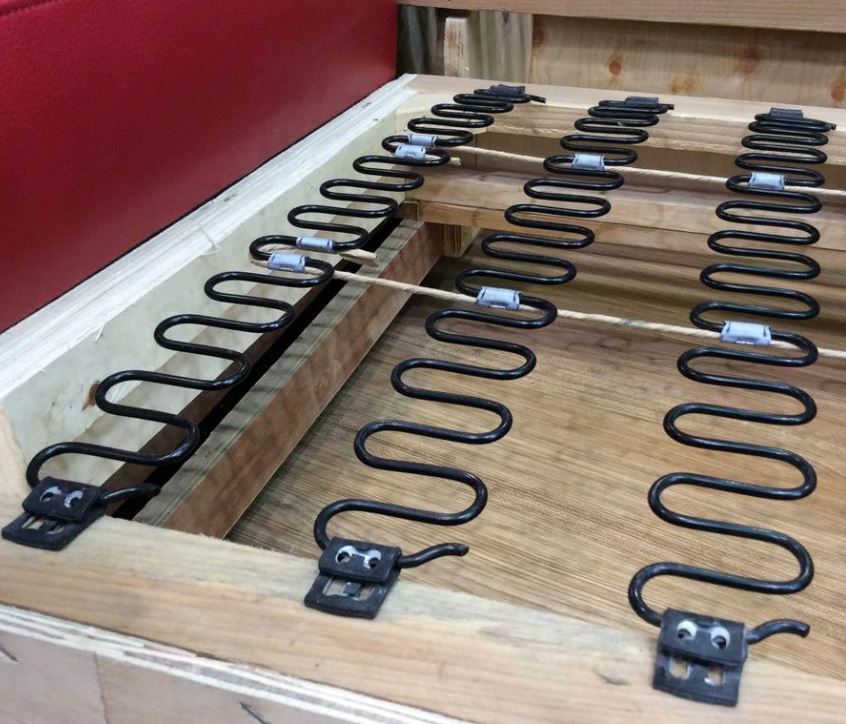
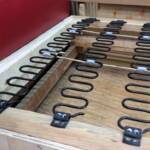
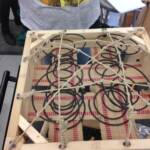
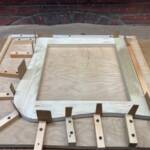
Mike will demonstrate a number of upholstery techniques including a simple slip seat using modern materials and various grades of foam and show how to properly calculate the “gap” needed for a drop in seat. In addition, he will show a classic coil spring tying (8-way tie) project and a sample of the use of serpentine (Zig-Zag) springs and clips and discuss the pros-cons of each type of treatment.
Especially for furniture makers, Mike will go over basic considerations for designing upholstered pieces, including standard sizes, types of secondary (tacking rail) woods, and placement of corner blocks and supports. An explanation of the various types and qualities of upholstery foam will also be included as well as a guide to buying leather for upholstery projects.
This presentation will be of interest to furniture builders, restorers and those just dying to know exactly what is supposed to be inside of a properly upholstered chair and there will be adequate time for questions throughout the day.
MIKE MASCELLI has been a student and practitioner of the upholstery trade for nearly 50 years and divides his time between the worlds of classic cars and classic furniture. He has provided upholstery for national champion cars and furniture that is on display at the US House of Representatives and numerous historic homes and private collections. He is also the longtime Director of the Professional Refinisher’s Group an organization of professionals in the conservation and restoration trades, from whom he has learned much of the science, art and craft of wood finishing. Mike actively lectures and teaches, and has instructed hundreds of students in basic and advanced upholstery techniques as well as the fundamentals of wood finishing at the Connecticut Valley School of Woodworking, the Marc Adams School of Woodworking, and numerous other schools and organizations both in person and on line in both America and England.
He contributed an essay on 18th century upholstery techniques for Roubo on Furniture by Don Williams (Lost Art Press). Mike has also published a number of articles on various aspects of historic upholstery in the Journal of the Society of American Period Furniture Makers (SAPFM) and on modern upholstery for Fine Woodworking. He has also completed several instructional videos on upholstery and finishing for Popular Woodworking, and Fine Woodworking, and was a presenter at the “Working Wood in the 18th c”. conference at Williamsburg. In the summer of 2024 Fine Woodworking will release an online course: Foundations of Furniture Finishing” presented by Mike.
In addition to driving some classic cars, Mike and his wife are the very proud grandparents of two small boys who are the main focus of semi-retirement.

The bandsaw can be one of the most versatile, accurate and safe machines in your workshop—providing it is set up and used properly. A new or even a well used bandsaw with a ½ HP motor can be tuned to cut precision joints or resaw flawlessly without purchasing aftermarket accessories or expensive blades. Installing new tires, selecting and setting blade tension, tracking, cutting curves and resawing will be covered. A variety of useful jigs designed to be used with the bandsaw will be demonstrated. Illustrations will be provided so you can make your own. Michael operates one of the most diversely equipped workshops in North America. It includes three industrial table saws but he can’t remember the last time he ripped a piece of wood on a table saw. Instead, he prefers to use a vintage 15” General Mfg. bandsaw. He bought this bandsaw in 1974, tracked the blade once with only modest tension, installed a factory fence parallel to the miter slot and has not had to adjust it in 50 years. That is one of nine bandsaws in his workshop. Let the bandsaw master show you how to make this simple machine the most versatile in your workshop. This class will be limited to 12 students; while mostly demonstration, the class size will allow for some student hands on.

Canadian designer/maker, teacher and mentor Michael C. Fortune has become acclaimed for his innovative, but resolved, designs for one-of-a-kind objects in wood, commissioned residential furnishings, and items in limited editions. He is acknowledged for both his technical and design expertise, giving lectures and workshops across Canada, United States, New Zealand, Australia, and Brazil. Michael's work has appeared in numerous exhibitions worldwide and he has taught at many schools and craft centers including; Sheridan College School of Crafts and Design, Ryerson Polytechnical Institute, the Rochester Institute of Technology NY, Worcester Center for Crafts in Massachusetts, Anderson Arts Center, Colorado, Savannah College of Art and Design, Australian National University School of Art, and the Marc Adams School in Indiana where the fellowship program for advanced students has been named in his honor. Michael is the senior mentor for the Artist in Residence program (2018, 2020) at the Centre for Fine Woodworking in New Zealand.
Fortune’s international career includes consulting for Trinidad and Tobago's Commonwealth Fund for Technical Assistance, working for sustainable source timber in Mexico aimed at supplying the expanding hotel industry within the country, and volunteering for Woodlinks, a joint Canadian/U.S. not-for-profit organization dedicated to revitalizing vocational training in secondary schools throughout North America. Michael is also assisting a new school in Puerto Rico that promotes use of timber salvaged after destructive hurricanes.
In 1993, Michael was the first woodworker to receive the prestigious Prix Saidye Bronfman, Canada’s highest award in the crafts, and in 2007 he was the first Canadian to receive the Award of Distinction from the Furniture Society. He received the Mather Award in 2019 for his contribution to craft in Ontario. Michael Fortune has a clear vision of how fine craft can positively effect the culture and economy of Canada and the world beyond.
http://www.michaelfortune.com/
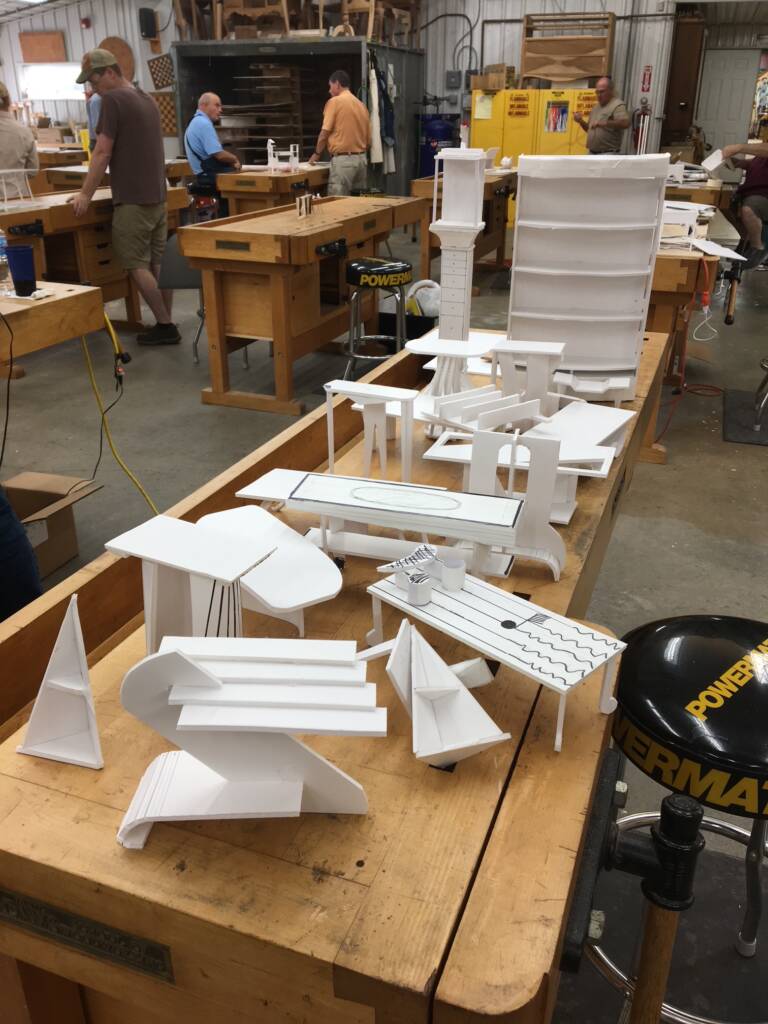
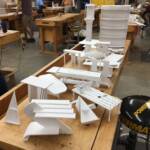
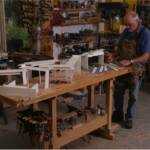
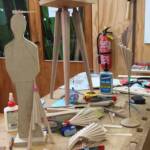
This 6-day workshop will introduce the participants to a series of simple bench top design exercises that will exponentially expand where and how you look for inspiration then be able to convert what you’ve observed into practical pieces of furniture or sculpture. This course is for woodworkers who want to move beyond working “square” or copying other woodworker’s designs. Sharpen those scissors, plug in that glue gun hone those new found observation skills and have fun while you develop your own unique furniture forms. This course will change your perception of furniture design and making.
Key Points
1. How to observe your environment and identify design ideas.
2. Develop your own custom design sequence.
3. How to sketch, make models and full-size mock-ups.
4. How to critique your own work and who to engage to critique your work
5. Assembling an idea bank that will be inspirational for years to come.
Tuition: $1400
Material: $100
Student Materials
- Dollar store Foamcore, 20 x 30 (2) each
- basswood or similar
- cardstock
- 9mm Olfa style cutter
- Architects scale (not engineers)
- Pad of tracing paper 11 x 14
- 2B and 6B pencils
- a cameraphone
Canadian designer/maker, teacher and mentor Michael C. Fortune has become acclaimed for his innovative, but resolved, designs for one-of-a-kind objects in wood, commissioned residential furnishings, and items in limited editions. He is acknowledged for both his technical and design expertise, giving lectures and workshops across Canada, United States, New Zealand, Australia, and Brazil. Michael's work has appeared in numerous exhibitions worldwide and he has taught at many schools and craft centers including; Sheridan College School of Crafts and Design, Ryerson Polytechnical Institute, the Rochester Institute of Technology NY, Worcester Center for Crafts in Massachusetts, Anderson Arts Center, Colorado, Savannah College of Art and Design, Australian National University School of Art, and the Marc Adams School in Indiana where the fellowship program for advanced students has been named in his honor. Michael is the senior mentor for the Artist in Residence program (2018, 2020) at the Centre for Fine Woodworking in New Zealand.
Fortune’s international career includes consulting for Trinidad and Tobago's Commonwealth Fund for Technical Assistance, working for sustainable source timber in Mexico aimed at supplying the expanding hotel industry within the country, and volunteering for Woodlinks, a joint Canadian/U.S. not-for-profit organization dedicated to revitalizing vocational training in secondary schools throughout North America. Michael is also assisting a new school in Puerto Rico that promotes use of timber salvaged after destructive hurricanes.
In 1993, Michael was the first woodworker to receive the prestigious Prix Saidye Bronfman, Canada’s highest award in the crafts, and in 2007 he was the first Canadian to receive the Award of Distinction from the Furniture Society. He received the Mather Award in 2019 for his contribution to craft in Ontario. Michael Fortune has a clear vision of how fine craft can positively effect the culture and economy of Canada and the world beyond.
http://www.michaelfortune.com/
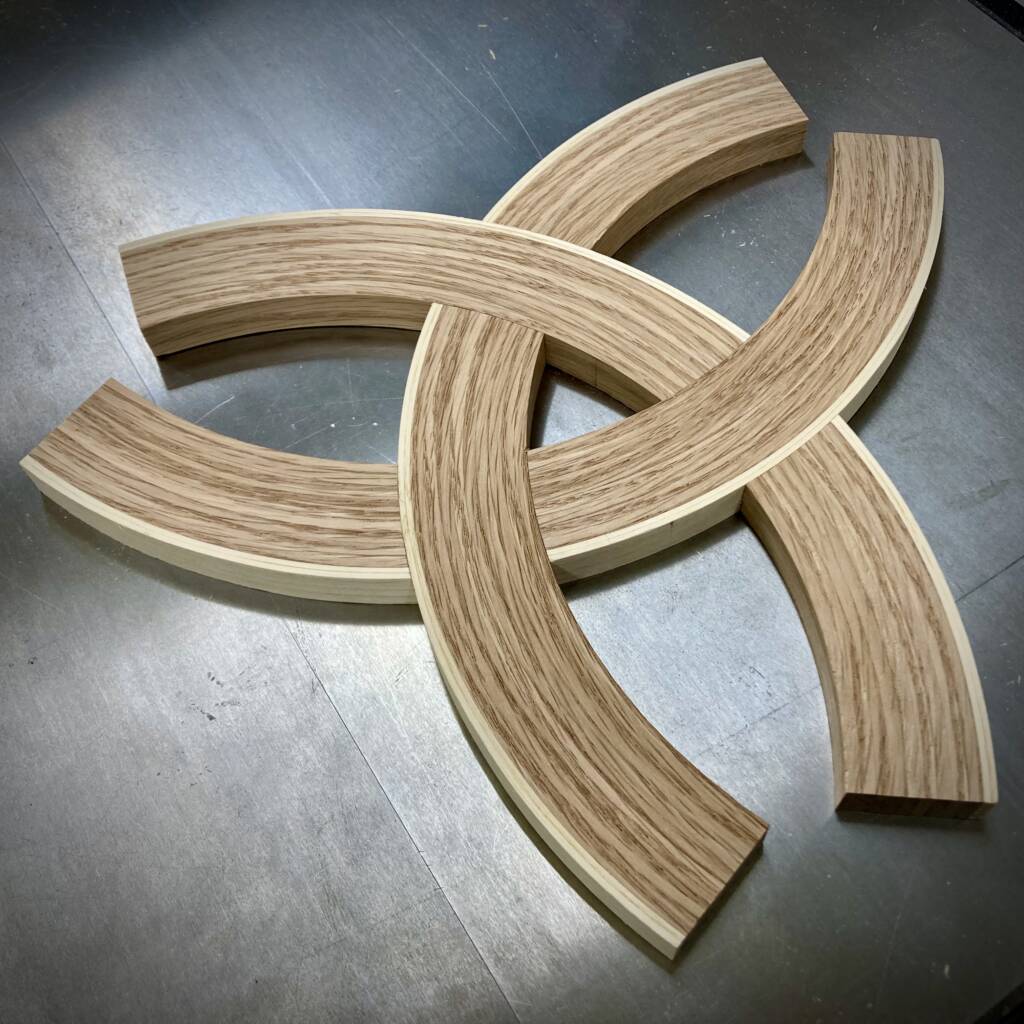
Gain an introductory understanding of bent lamination, including material science, mold and jig making, and curved joinery.
Students will build a bent wood trivet using a variety of specialized techniques throughout this two-day class.
Tuition: $350
Materials: $50
Capacity: 10
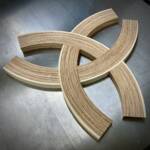
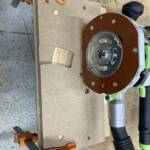
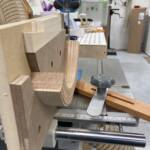
Laura Kishimoto is a designer and maker based in Denver, Colorado and a graduate of the Rhode Island School of Design, where she earned a BFA in Furniture Design in 2013. Her work falls somewhere between sculpture and furniture, distinguished by its spatial complexity and visually striking curves. Central to her practice is a technique known as freeform bent lamination, which allows her to push the wood to its material limits and create curiously organic and emotionally evocative forms. Her pieces can be found in the permanent collections of the Denver Art Museum in Colorado and the Mint Museum in North Carolina.

Bent lamination represents a dramatic departure from most traditional fine woodworking. Rather than working within rectilinear geometry, you will lean into the materiality of the wood and explore its natural strengths through curvature. Reference face is often non-existent, so cutting joinery requires some creative thinking and novel use of machinery and hand tools. We will explore a variety of methods including cold lamination, mold making, vacuum forming, and freeform bending. Students will design and prototype a project that showcases bent lamination aesthetically and structurally.
Class fee: $1200
Materials fee: $200
Class size limited to 10


Laura Kishimoto is a designer and maker based in Denver, Colorado and a graduate of the Rhode Island School of Design, where she earned a BFA in Furniture Design in 2013. Her work falls somewhere between sculpture and furniture, distinguished by its spatial complexity and visually striking curves. Central to her practice is a technique known as freeform bent lamination, which allows her to push the wood to its material limits and create curiously organic and emotionally evocative forms. Her pieces can be found in the permanent collections of the Denver Art Museum in Colorado and the Mint Museum in North Carolina.
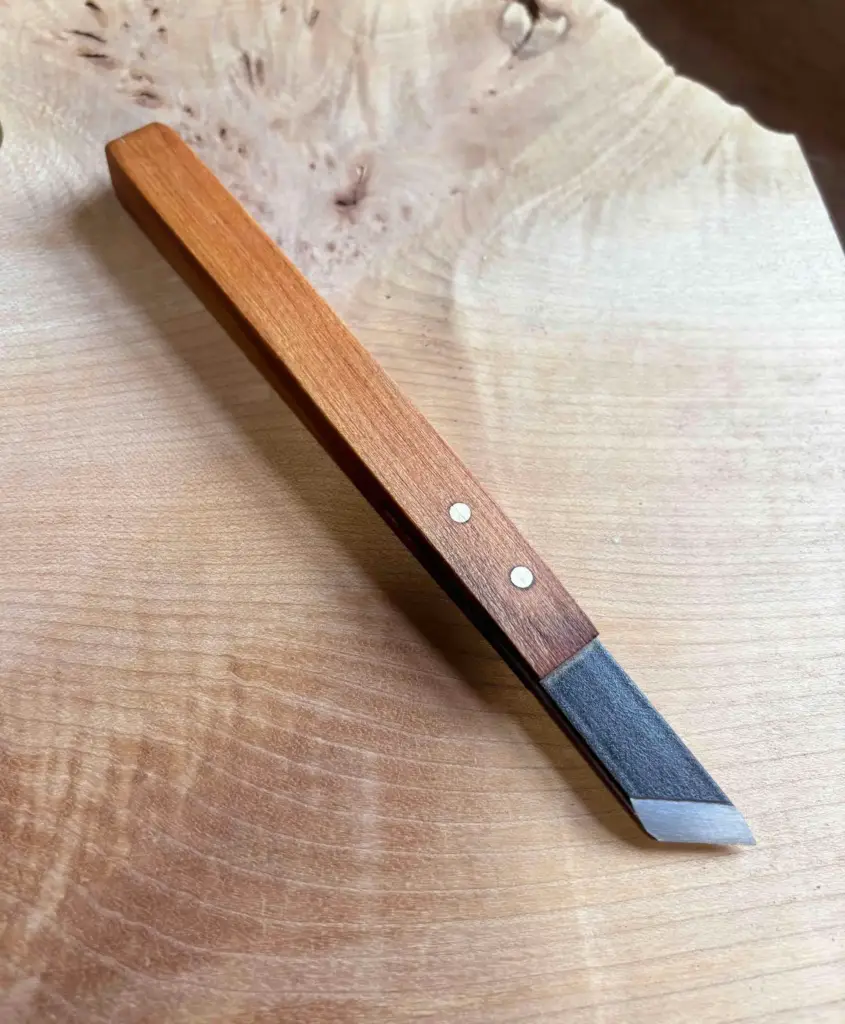
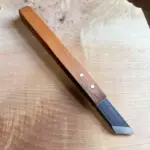
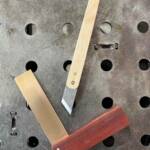
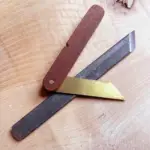
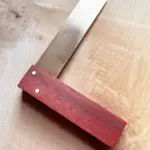
In this weekend class, students will learn a few fundamental metalworking and woodworking techniques to create a series of small marking and layout tools. In the making of a marking knife, small bevel gauge, and a square, we'll learn about different metals and their applications (tool steels, brass, and bronze), learn to to file, grind, heat treat, drill, hammer, sand, and cut our metals, and we'll make wooden handles by incorporating cutting and shaping techniques using the bandsaw, drill press, sanders, and various hand tools. This class will be a practical way for any woodworker to dip their toes into metalworking.
Class fee: $350
Materials fee: $50
Class size limited to 10
Sophie is a metalworker, woodworker, and furniture maker currently based in Reading, PA. She makes classic furniture designs recreated out of steel to give voice to women in both the woodworking and metal fields, and she utilizes steel in the making of her work to explicitly expand upon the materials that are considered to be part of the fine furniture making field.
Sophie received her MFA in Furniture Design and Woodworking from San Diego State University, and BFA in Sculpture and Drawing from SUNY Purchase College. She has exhibited her work across the country, including Blue Spiral 1 Gallery (NC), the Center for Art in Wood (PA), and the Metal Museum (TN), and has been fortunate to receive several grants, fellowships, and residencies to help advance her career, including the John D. Mineck Fellowship in 2022. Sophie currently teaches at Kutztown University and has taught workshops at A Workshop of Our Own, Penland School of Craft, Arrowmont School of Arts and Crafts, the Appalachian Center for Craft, and Haystack Mountain School of Crafts.
https://sophieglenn.com